SA Designer Studio Est. Bengaluru Book a consultation

The craft

What happens between the order and the garment

Most people commissioning a piece have never done it before. This is the whole process, start to finish.

The techniques

Three ways of putting thread into cloth

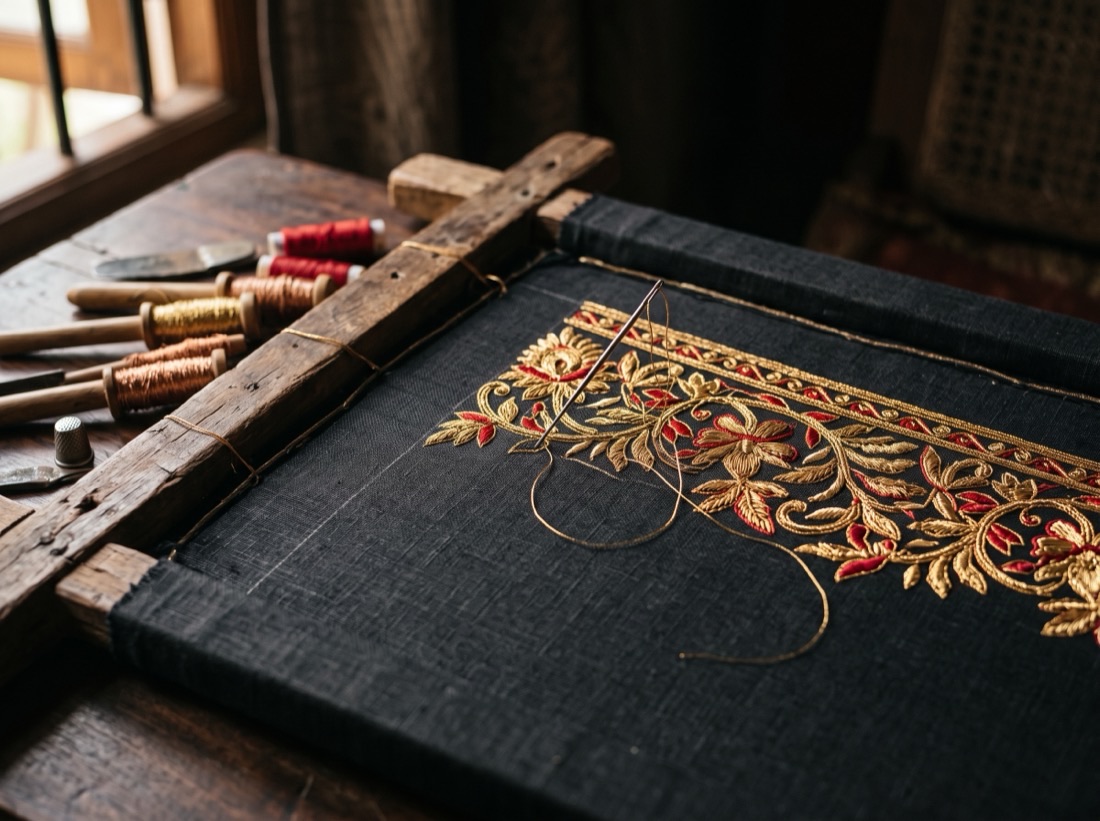
Aari, also called maggam, is chain stitch worked with a fine hooked needle on fabric held taut in a frame. It builds the dense florals, vines and temple motifs across a yoke.

Zardosi lays metallic wire and coil onto the surface rather than through it, which is why it sits raised and throws shadow.

Shisha sets small mirrors into a cord frame stitched down around each one — a sleeve lattice is built mirror by mirror.

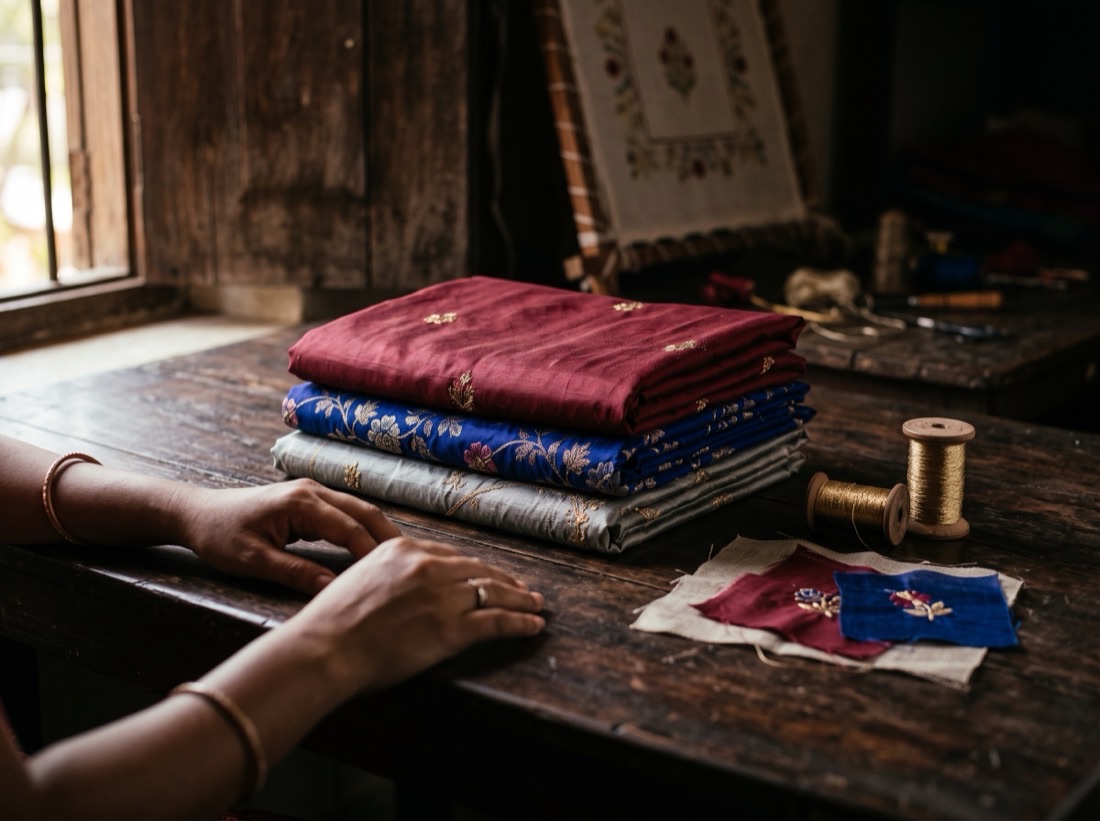
Folded silk sarees in maroon, blue and silver stacked on a dark table with gold zari thread and fabric swatches.
01

Consultation

Come to the studio, or send photographs on WhatsApp. We talk through the occasion, the saree or fabric you are working with, and what you want the finished piece to feel like. If you have a reference image, bring it — it is the fastest way to get to the same picture.
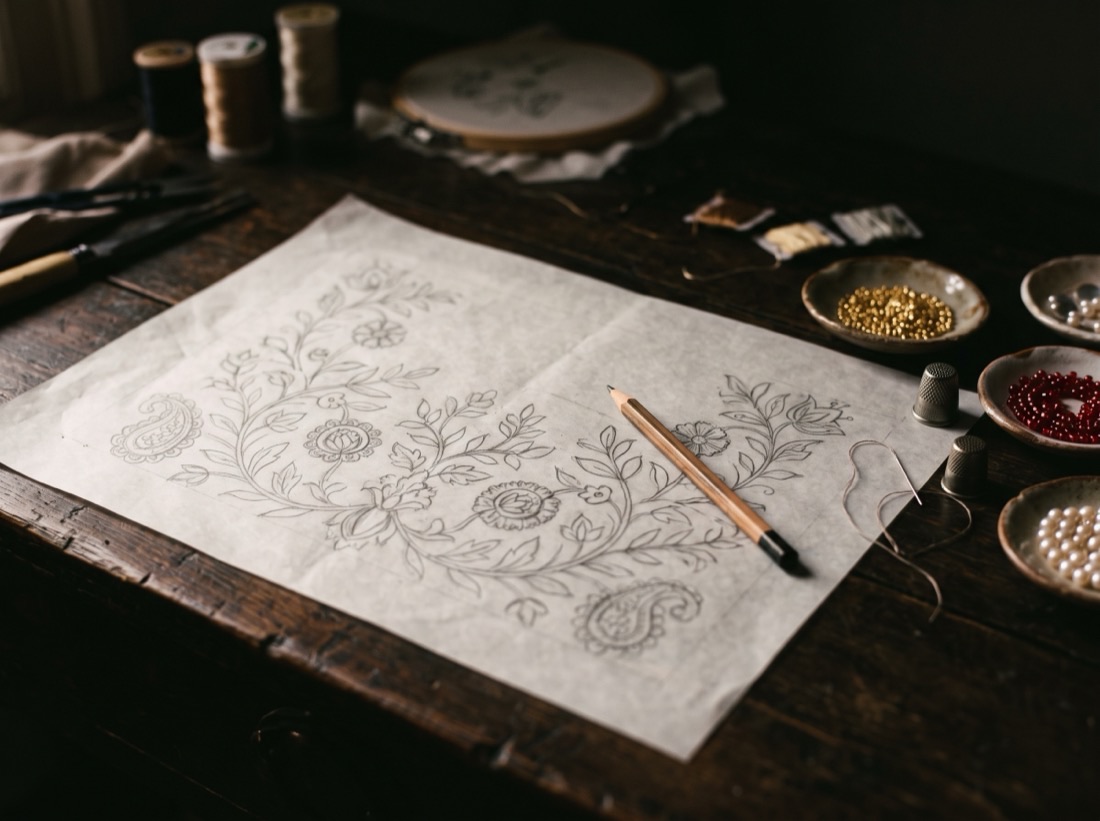
A floral embroidery motif drawn in pencil on tracing paper, with small dishes of gold beads, red beads and pearls beside it.
02

Design

The motif layout is drawn for your neckline, sleeve and back. This is where the decisions are made: how dense the yoke should be, where the piece is deliberately left quiet, which threads and beads are used, and how the back reads when you are seated.

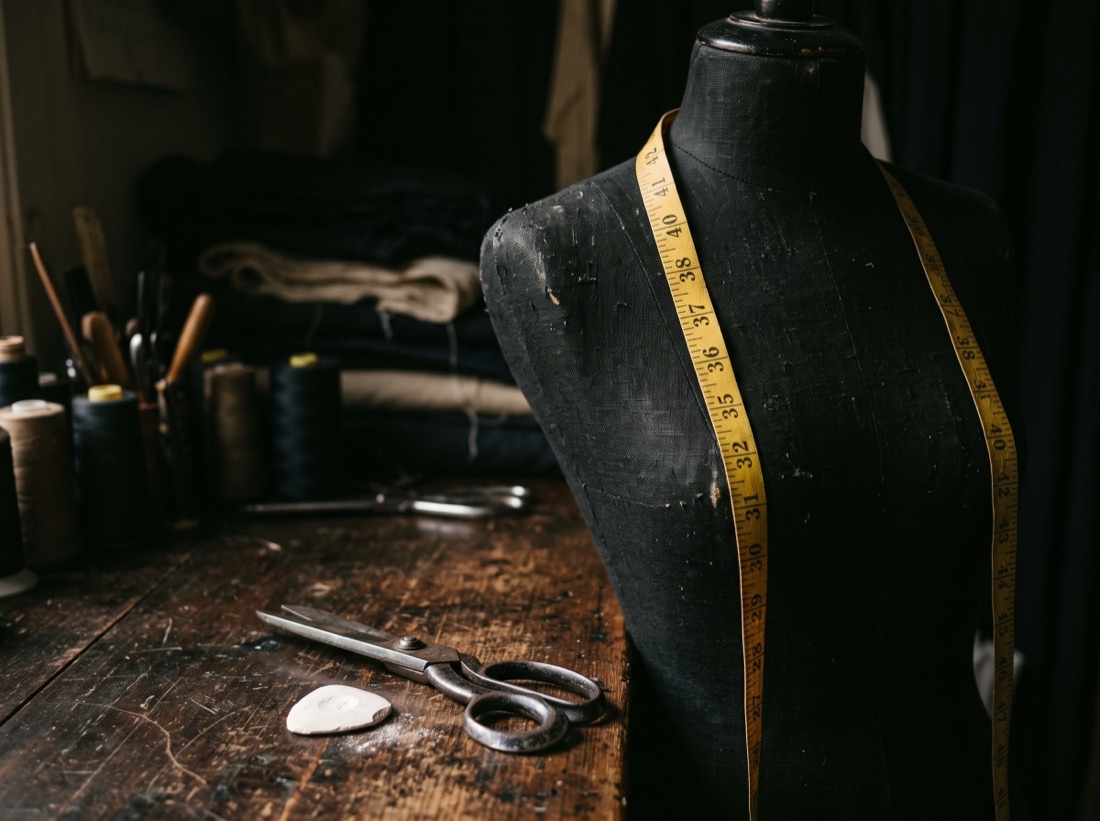
A yellow measuring tape draped over the shoulder of a black tailor's dress form, with chalk and shears below.
03

Measurement

Measured in person. Nothing here is sized small, medium or large — the pattern is drafted to your measurements, and fit matters more on an embroidered blouse than a plain one, because the work has to sit correctly across the shoulder.

An aari frame with fabric stretched taut, a partially completed gold and red floral design, and a hooked needle resting mid-work.
04

On the frame

The cut fabric is stretched taut on a wooden frame and the embroidery is worked by hand with a hooked aari needle. Zardosi is laid separately, coil by coil. This is the longest stage by a wide margin and the one that cannot be compressed.

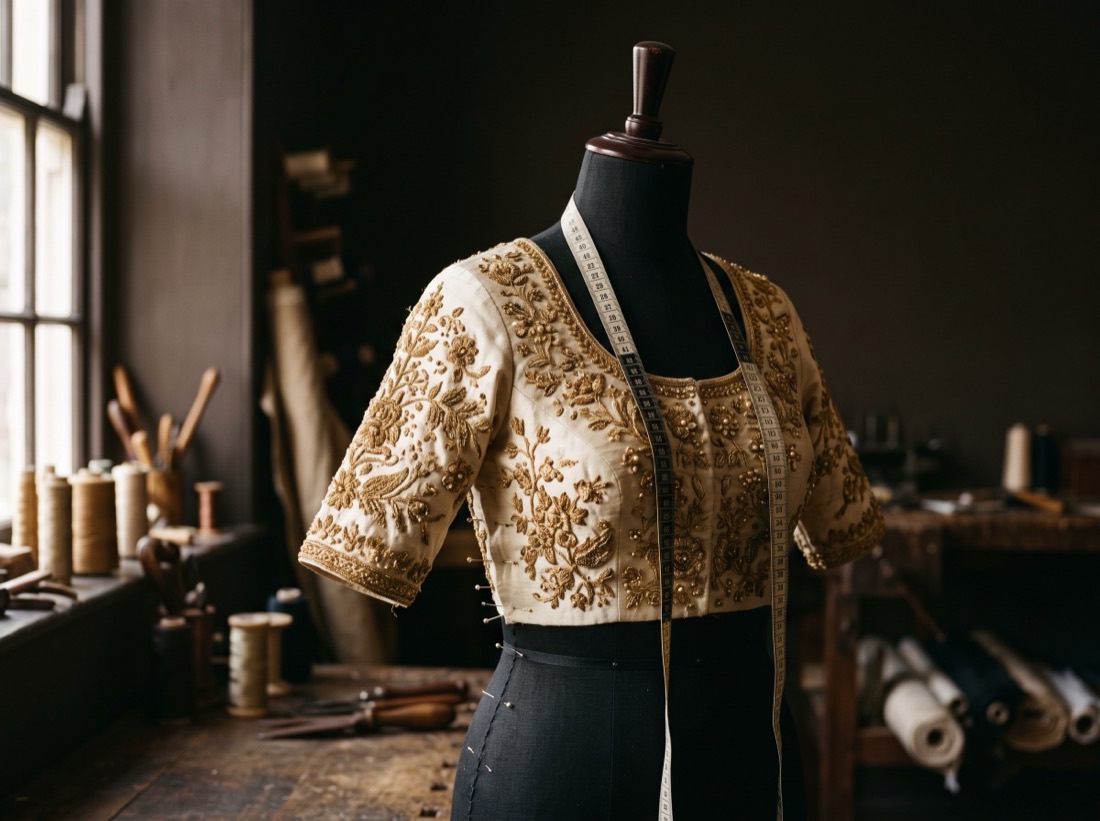
An embroidered silk blouse pinned onto a black dress form with steel pins along the side seam and a measuring tape hanging from the neck.
05

Stitching & fitting

The embroidered panels are assembled into the finished garment and you come in to try it. Adjustments are made there and then. A fitting is part of the commission, not an extra.

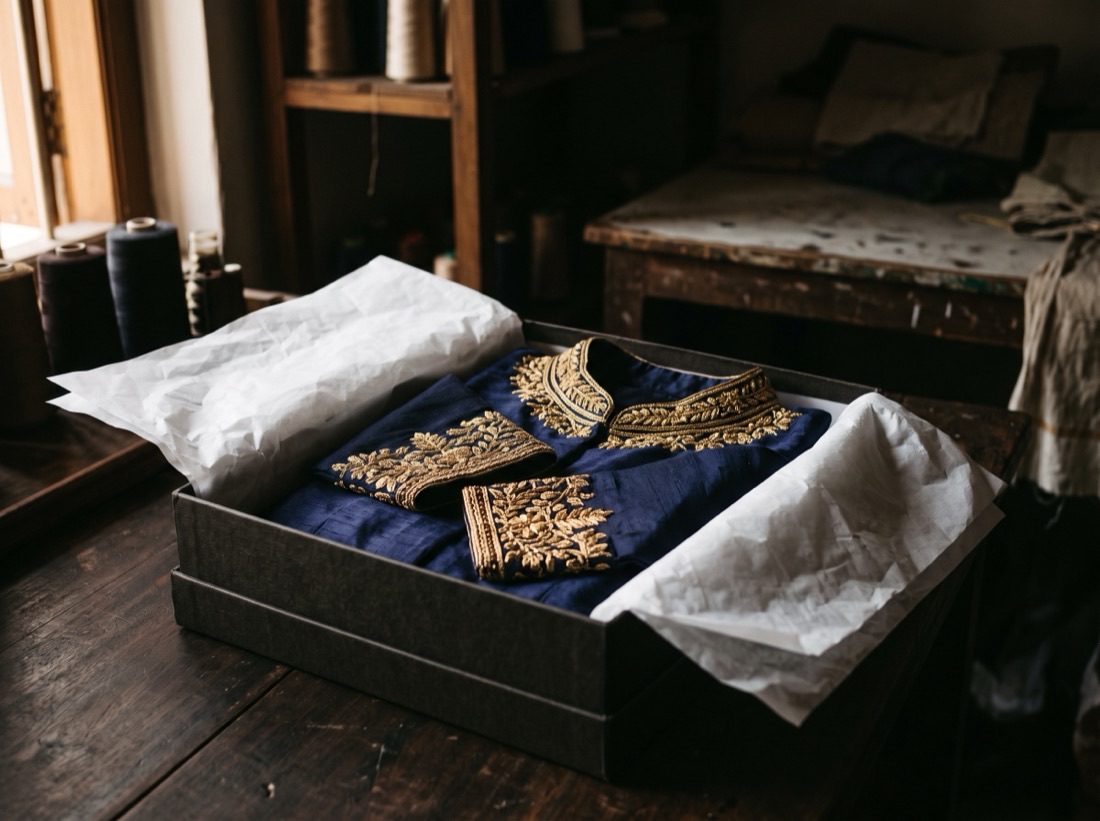
A finished embroidered silk blouse folded in white tissue paper inside a dark box, gold threadwork catching the light.
06

Handover

Final press, final inspection, and it is yours. We will tell you how to store and clean it — hand embroidery needs slightly different care from a plain blouse, and it will last for years if it gets it.

Ready to start one?

Bridal work should be started well ahead of the date. The earlier you come in, the more the design can be yours rather than whatever fits the time left.

Book a consultation

WhatsApp